

Funding & Grants
Current funded projects supporting our research in biomechanics modeling and digital twins.

ERI: Multiscale Electromechanical Modeling of Stomach Motility and Structure for Advancing Digital Twin Models

A General Method for Fabrication of Hierarchical Structures for Flexible Energy Storage Materials Using Supramolecular Assembly of Biomolecules
Achievements
Dr Lei Shi's Accomplishments
From early milestones to ambitious long-term goals, this page highlights how the Intelligent Biomechanics Lab is pushing GI biomechanics and digital twin research forward.
-
 August 23, 2022
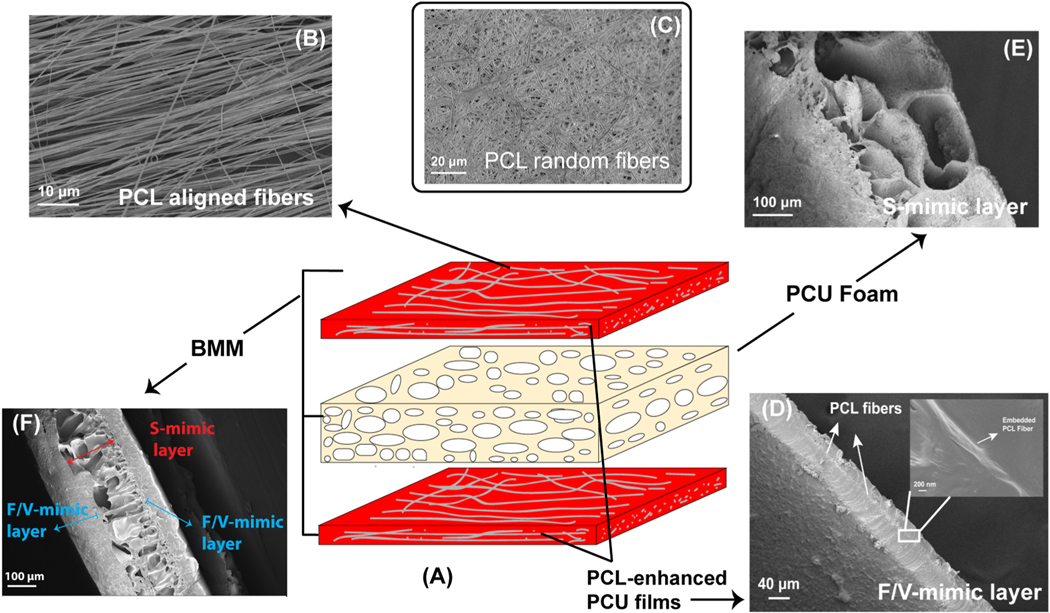
A biomimetic multilayered polymeric material designed for heart valve repair and replacement
In this Biomaterials study, the team developed a biomimetic multilayered material (BMM) for heart valve repair and replacement designed to better mimic native valve tissue. Using a “film–foam–film” structure with aligned fibers, it achieved valve-like anisotropic mechanical behavior and showed strong stability under accelerated oxidative aging. The material also reduced protein adsorption and calcification in in vitro and in vivo tests, supporting its promise for longer-lasting valve materials.
-
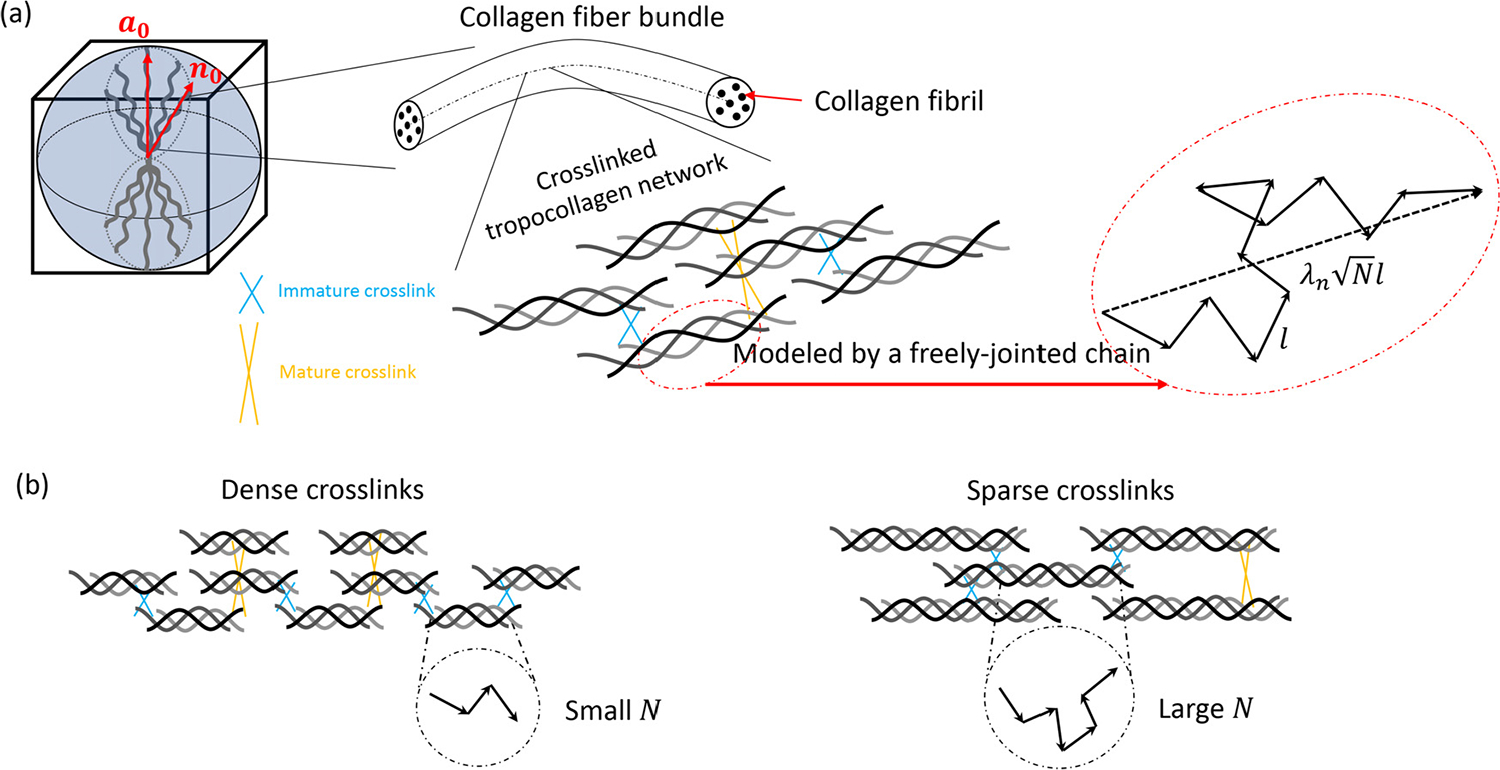
Three-dimensional anisotropic hyperelastic constitutive model describing the mechanical response of human and mouse cervix.
-
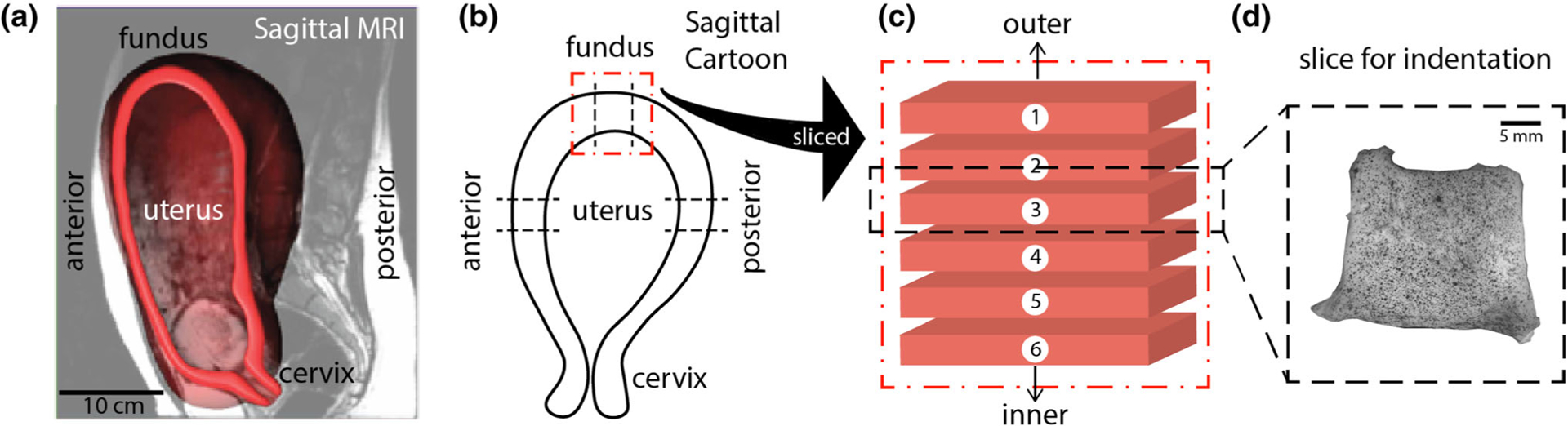
Anisotropic Mechanical Properties of the Human Uterus Measured by Spherical Indentation.
-
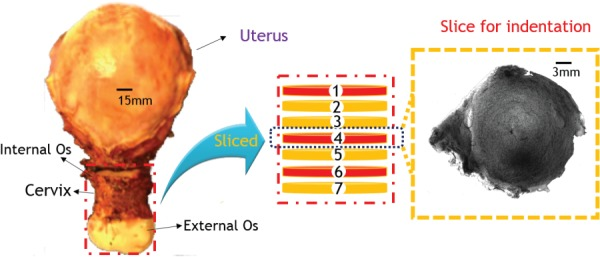
Anisotropic Material Characterization of Human Cervix Tissue Based on Indentation and Inverse Finite Element Analysis.
Selected Publications
Citation-style listings with direct links. (Dates reflect online publication / Epub where available.)
2025
- Aróstica R, et al. A software benchmark for cardiac elastodynamics. Computer Methods in Applied Mechanics and Engineering. 2025;435:117485.
- Shi L, Chen IY, Vedula V. Personalized Multiscale Modeling of Left Atrial Mechanics and Blood Flow. Computer Methods in Applied Mechanics and Engineering. 2025;448:118412.
- Shi L, Chen Y, Vedula V. Heartsimage: Attention-enhanced graph neural networks for accelerating cardiac mechanics modeling. arXiv. 2025. (arXiv:2504.18968)
- Fang S, et al. Equilibrium mechanical properties of the human uterus in tension and compression. Acta Biomaterialia. 2025;194:219-232.
- Shi L, Myers KM. Microstructure-informed hyper-viscoelastic model capturing soft tissue tensile behavior across large deformations. Journal of the Mechanics and Physics of Solids. (Epub 2025)
- Brown AL, et al. Personalized biventricular mechanics and sensitivity to model morphology. bioRxiv. 2025.
- Gan B, et al. Hemodynamic Impact of Geometrical and Structural Heterogeneity using Left Atrial Digital Twins. Division of Fluid Dynamics Annual Meeting. 2025.
- Fang J, Li Y, Shi L. Advances in materials and actuation strategies for wearable medical robotics: optimization for biomedical applications. MedMat. 2025.
2024
- Brown AL, et al. A Modular Framework for Implicit 3D-0D Coupling in Cardiac Mechanics. Computer Methods in Applied Mechanics and Engineering. 2024;421:116764.
- Shi L, Chen I, Takayama H, Vedula V. An Optimization Framework to Personalize Passive Cardiac Mechanics. Computer Methods in Applied Mechanics and Engineering. 2024;432:117401.
- Fang S, et al. Equilibrium mechanical properties of the nonhuman primate cervix. Journal of Biomechanical Engineering. 2024;146(8):081001.
- Fang S, et al. Equilibrium Mechanical Properties of the Human Uterus. Reproductive Sciences. 2024.
- Fang S, et al. Equilibrium Tension and Compression Mechanical Properties of the Human Uterus. bioRxiv. 2024.
2023
- Shi L, Myers KM. A finite porous-viscoelastic model capturing mechanical behavior of human cervix under multi-step spherical indentation. Journal of the Mechanical Behavior of Biomedical Materials. 2023;143:105875.
- Shi L. Human Cervix Spherical Indentation Data. Dataset. 2023.
2022
- Shi L, et al. A biomimetic multilayered polymeric material designed for heart valve repair and replacement. Biomaterials. 2022. (Epub Aug 23, 2022)
- Shi L, et al. Three-dimensional anisotropic hyperelastic constitutive model describing the mechanical response of human and mouse cervix. Acta Biomaterialia. 2022 Sep 15. (Epub Aug 2, 2022)
- Lee N, et al. Mechanical Response of Mouse Cervices Lacking Decorin and Biglycan During Pregnancy. Journal of Biomechanical Engineering. 2022;144(6):061009.
- Fang S, et al. Mapping the Mechanical Properties of Nonhuman Primate Cervix to Inform Quantitative Ultrasound Measurements. Reproductive Sciences. 2022.
- Shi L, Myers KM. FEBio Plugin of Entropic Fiber Model based on Langevin Mechanics (Shi et al. 2022 Acta Biomaterialia). Software/Plugin. 2022.
- Shi L, Myers KM. Tension and Indentation Experiment Results for Human Cervix (Shi et al. 2022 Acta Biomaterialia). Dataset. 2022.
2021
- Fang S, et al. Anisotropic Mechanical Properties of the Human Uterus Measured by Spherical Indentation. Annals of Biomedical Engineering. 2021. (Epub Apr 20, 2021)
- Lee N, et al. Mechanical Response of Mouse Cervices Lacking Decorin and Biglycan during Pregnancy: Data. Dataset. 2021.
- Shi L. Unconstrained Arruda-Boyce Model for FEBio 2 and 3. Software/Model. 2021.
- Shi L. On the Mechanical Experiments and Modeling of Human Cervix. Columbia University. 2021.
2020
- Li A, et al. Nacre-inspired composite electrolytes for load-bearing solid-state lithium-metal batteries. Advanced Materials. 2020;32(2):1905517.
2019
- Shi L, et al. Anisotropic Material Characterization of Human Cervix Tissue Based on Indentation and Inverse Finite Element Analysis. Journal of Biomechanical Engineering. 2019.
- Song Q, et al. Thermally stable, nano-porous and eco-friendly sodium alginate/attapulgite separator for lithium-ion batteries. Energy Storage Materials. 2019;22:48-56.
- Shi L, Myers KM. Spherical Indentation Equilibrium Mechanical Data of Nonpregnant Human Cervical Tissue. Dataset. 2019.
2017
- Shi L, et al. Configurational Entropy of Adlayers in Atomic Layer Deposition. Chemistry of Materials. 2017;29(13):5458-5462.
2016
- Feng W, Han L, Shi L, Zhao D, Yang K. Optimal control for a cooperative rendezvous between two spacecraft from determined orbits. The Journal of the Astronautical Sciences. 2016;63(1):23-46.
- Shi L. Analysis of Deformation of the “9 + 2” Flagellum using the Finite Element Method. Washington University in St. Louis. 2016.
2015
- Feng W, Zhao D, Shi L, Yang K. Optimization control for the far-distance rapid cooperative rendezvous of spacecraft with different masses. Aerospace Science and Technology. 2015;45:449-461.
2014
- Feng W, Ren F, Shi L. Optimal control for far-distance rapid cooperative rendezvous. Proceedings of the Institution of Mechanical Engineers, Part G: Journal of Aerospace Engineering. 2014.